

Have you ever received a text saying “WBY?” and stared at your screen wondering what on earth it means? You are not alone. Texting slang moves fast, and keeping up with it can feel like learning a new language every few months. But this one is actually pretty simple once you know it — and once you do, you will start spotting it everywhere.
In this article, we break down the WBY full form, why people use it, how to use it correctly, and what mistakes to avoid. Whether you are new to texting slang or just filling in a gap in your knowledge, this guide covers everything you need.
What Is The WBY Full Form?
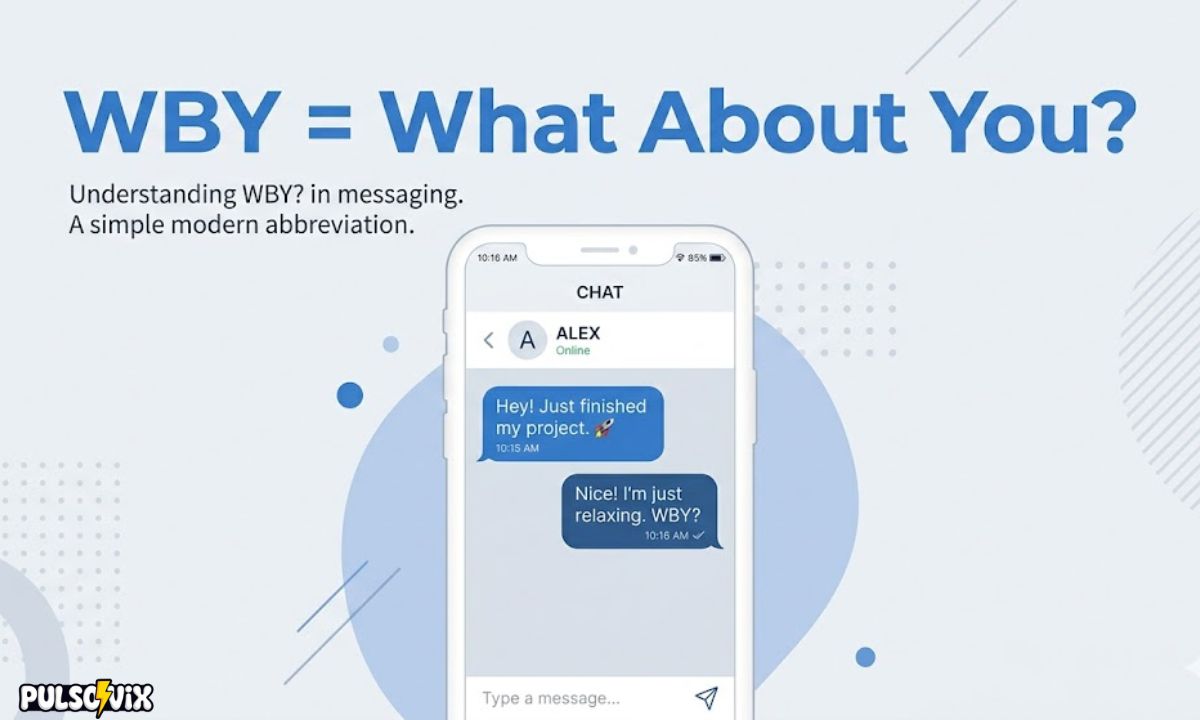
WBY stands for “What About You?”
It is a casual, shorthand way of turning a question back to the person you are talking to. Think of it as the texting equivalent of saying “And you?” after someone asks how you are doing.
| Abbreviation | Full Form | Category |
| WBY | What About You? | Texting / Chat Slang |
The abbreviation compresses three common words into three letters, making it quicker to type — especially on a mobile keyboard. It fits naturally into fast-moving conversations where nobody wants to spend time typing out full sentences.
At its core, WBY is a conversation extender. It keeps the dialogue going by inviting the other person to share their thoughts, feelings, or experiences. Simple, effective, and incredibly common.
Why People Use “WBY”
Speed is the biggest reason. When you are texting, every extra second spent typing matters. Shortening “What about you?” to “WBY” shaves off keystrokes and keeps the conversation flowing naturally.
But there is more to it than just saving time. Here is why WBY has become so widely used:
It is polite without being formal. Asking “WBY?” shows genuine interest in the other person without sounding stiff or rehearsed. It feels warm and conversational.
It keeps conversations balanced. Good texting etiquette means not making everything about yourself. Dropping a “WBY?” after sharing something about yourself signals that you care about the other person’s experience too.
It is universally understood. Unlike some slang that is region-specific or niche, WBY is broadly recognized across different age groups and platforms.
It is low-effort but high-impact. Three letters can completely shift the direction of a conversation. That is a pretty good return on investment.
How To Use WBY In Real Conversations
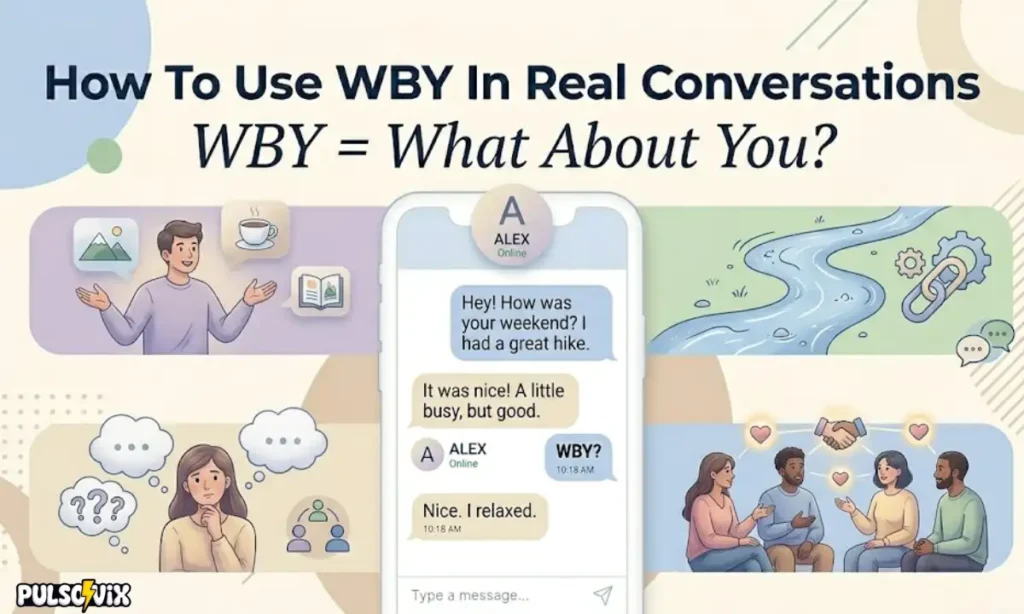
Using WBY is straightforward, but like any tool, context matters. The most natural use is immediately after sharing something about yourself, to flip the question back to the other person.
Basic pattern:
Share something → Add WBY → Invite their response
Here is how it typically flows:
- “I had the best weekend, we went hiking. WBY?”
- “I’m feeling kind of tired today honestly. WBY?”
- “I just finished watching that new series everyone’s talking about. WBY, have you seen it?”
- “Not much going on here. WBY?”
You can also use WBY as a standalone opener when you already know what the other person has been up to:
- “Hey, I heard you had a job interview — WBY, how did it go?”
Notice that WBY works best in lowercase or uppercase interchangeably. Both “wby” and “WBY” are perfectly acceptable depending on your texting style.
Meanings Across Platforms
While WBY almost always means “What About You?”, the platform you are using can influence its tone and frequency.
| Platform | Common Usage | Tone |
| SMS / iMessage | Very common; casual daily check-ins | Friendly, personal |
| Instagram DMs | Used in reply threads and story replies | Casual, social |
| Snapchat | Quick back-and-forth chats | Playful, informal |
| Common in group chats and personal messages | Casual to semi-informal | |
| Twitter / X | Rare; more often written out in full | Public, formal |
| Discord | Used in direct messages and casual servers | Informal, community-based |
| Almost never used; too informal for the platform | Professional context = avoid |
On platforms built around quick, informal communication — Snapchat, Instagram DMs, iMessage — WBY fits right in. On professional or public-facing platforms, it can come across as out of place or even unprofessional.
Also, read this blog: Messege or Message: The Correct Spelling
When To Use WBY (And When Not To)
Knowing when to reach for WBY — and when to put it away — makes a big difference in how your messages land.
Use “WBY” When:
- You are texting a friend or close acquaintance. WBY thrives in informal, comfortable relationships where casual language is the norm.
- You want to keep a conversation going. It is the perfect low-effort way to pass the conversational baton back.
- You are responding to a “how are you?” type of message. After answering, WBY naturally rounds things out.
- You are in a group chat. It works well when checking in with multiple people at once.
- You are matching the other person’s energy. If they are already using abbreviations and casual language, WBY fits right in.
Avoid “WBY” When:
- You are emailing or messaging a colleague or boss. Even in internal Slack messages, “WBY?” can come across as too casual depending on workplace culture.
- You are replying to someone in a serious or emotional conversation. If someone has shared something difficult, leading with slang can feel dismissive.
- You are writing to someone you have never met. First impressions matter, and abbreviations can seem lazy or careless.
- You are on a professional networking platform. LinkedIn, formal email, or client communication is not the place for texting shorthand.
- The other person clearly prefers more formal communication. Always match your audience.
Common Variations Of WBY
Language is flexible, and WBY has a few cousins that pop up in similar contexts. Here are the most common variations:
HBY — How About You? Very similar to WBY, but with a slightly different feel. “HBY” is often used when you have already made a statement and want the other person’s take. Example: “I think the movie was great. HBY?”
WDYT — What Do You Think? Used when you specifically want someone’s opinion rather than a general update. Example: “I am thinking of going with the blue one. WDYT?”
U2 — You Too Not a question, but often used in response to something said, similar in spirit. Example: “Have a great day!” → “Thanks, u2!”
WBU — What About You? / What ‘Bout You? This is essentially a synonym of WBY. WBU is arguably just as common, and the two are often used interchangeably. Regional preferences and personal habit tend to determine which one someone gravitates toward.
WUBU2 — What Have You Been Up To? A longer form that implies catching up after some time apart, rather than a quick check-in.
Similar Terms & Alternatives Table
| Term | Meaning | When To Use |
| WBY | What About You? | General check-in, casual conversation |
| WBU | What About You? / What ‘Bout You? | Identical usage to WBY |
| HBY | How About You? | After sharing a preference or opinion |
| WDYT | What Do You Think? | Asking for a specific opinion |
| WUBU2 | What Have You Been Up To? | Catching up after time apart |
| U | You | General reference to the other person |
| NMU | Not Much, You? | Replying to “what’s up” type questions |
| IKR | I Know, Right? | Expressing agreement/shared feeling |
| HMU | Hit Me Up | Asking someone to contact you |
| LMK | Let Me Know | Requesting a response or update |
Real-Life Chat Examples
Seeing WBY in action makes everything click. Here are some realistic texting scenarios:
Example 1 — The Daily Check-In
Alex: Hey! Just got home from work, completely drained. WBY?
Jordan: Ugh, same honestly. It’s been one of those Mondays.
Example 2 — Weekend Plans
Sam: I’m thinking of going to the farmer’s market on Saturday. WBY, you doing anything?
Riley: Oh nice! I was just going to stay in, but that actually sounds fun.
Example 3 — The Opinion Flip
Taylor: I thought the finale was kind of disappointing tbh. WBY?
Morgan: YES. I felt the same way, it felt rushed.
Example 4 — Simple Morning Text
Casey: Good morning! I had the weirdest dream last night lol. WBY, sleep well?
Drew: Haha yes actually, best sleep in weeks.
Example 5 — Group Chat Vibe Check
Group Chat:
Jamie: Who’s going to the party Friday? I’ll definitely be there. WBY?
Priya: In!
Luca: Same, wouldn’t miss it.
In every example, WBY does the same job: it keeps things moving and shows interest in the other person without requiring a long, formal sentence.
Is WBY Only Used By Teens?
This is one of the most common misconceptions about texting slang. Short answer: no, not at all.
While WBY and similar abbreviations certainly got their start in younger demographics — particularly teenagers who text constantly and have developed a near-shorthand language of their own — the usage has spread well beyond that age group.
Millennials who grew up with MSN Messenger, AIM, and early texting culture have been comfortable with abbreviations like this for over two decades. Many adults in their 30s and 40s use WBY, WBU, HBY, and similar terms regularly in casual conversations.
Even older generations who have adopted smartphones and messaging apps naturally pick up common shorthand from their contacts over time. If you text your niece or your coworker and they use WBY, you start recognizing it — and eventually using it yourself.
That said, formality expectations do shift with age and context. A 45-year-old professional is unlikely to use WBY in a work Slack channel, even if they use it with friends. Teens, on the other hand, might use it almost everywhere. The term itself is not age-locked — its appropriateness just depends on who you are talking to and where.
Common Mistakes To Avoid
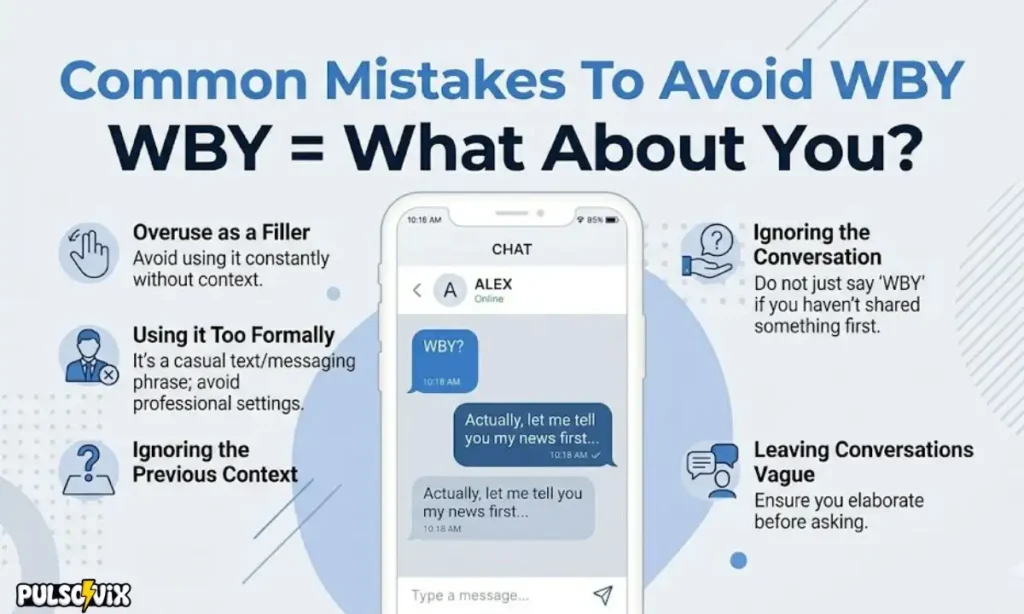
Even something as simple as WBY has a few pitfalls worth knowing about:
Using it in the wrong context. The number one mistake is dropping WBY into professional or formal settings. A text to your best friend is one thing; a message to a client or hiring manager is another.
Overusing it. If every single message ends with WBY, it starts to feel like a reflexive filler rather than genuine curiosity. Use it when it actually makes sense, not just as a default sign-off.
Confusing WBY with WBU. These two mean essentially the same thing, so confusing them is not a disaster. But be aware that some people use only one or the other, and mixing them up can occasionally cause confusion if someone is unfamiliar with both.
Ignoring tone. WBY is an upbeat, casual term. Using it in response to a heavy or emotional message — like after someone shares bad news — can come across as flippant or uncaring, even if that is not your intention.
Assuming everyone knows it. Not everyone is fluent in texting shorthand. If you are messaging someone who is less familiar with slang, writing out “What about you?” in full takes two extra seconds and avoids any confusion.
Quick Summary
Here is everything you need to remember about WBY in one place:
| Topic | Key Takeaway |
| Full Form | What About You? |
| Type | Informal / Texting Slang |
| Common Synonym | WBU (What About You?) |
| Best Used | Casual conversations, check-ins, friendships |
| Avoid Using | Professional settings, formal communication |
| Age Group | All ages; most common among younger users |
| Platforms | SMS, Instagram, Snapchat, WhatsApp, Discord |
| Tone | Friendly, curious, conversational |
WBY is three letters that do a lot of conversational heavy lifting. It shows interest, keeps dialogue going, and fits naturally into the rhythm of modern messaging.
Final Thoughts
Texting slang can seem overwhelming at first — new terms appear constantly, and it is easy to feel left behind. But WBY is one of the fundamentals. It is simple, friendly, and genuinely useful in everyday digital communication.
Now that you know the WBY full form, its meaning, and exactly how to use it, you are ready to deploy it confidently in the right moments. Whether you are catching up with a friend, doing a quick vibe check in a group chat, or just keeping a conversation alive, WBY is a reliable, natural-sounding tool to have in your texting vocabulary.
And hey — now that you know all about WBY… WBY? What are you planning to text first?
