
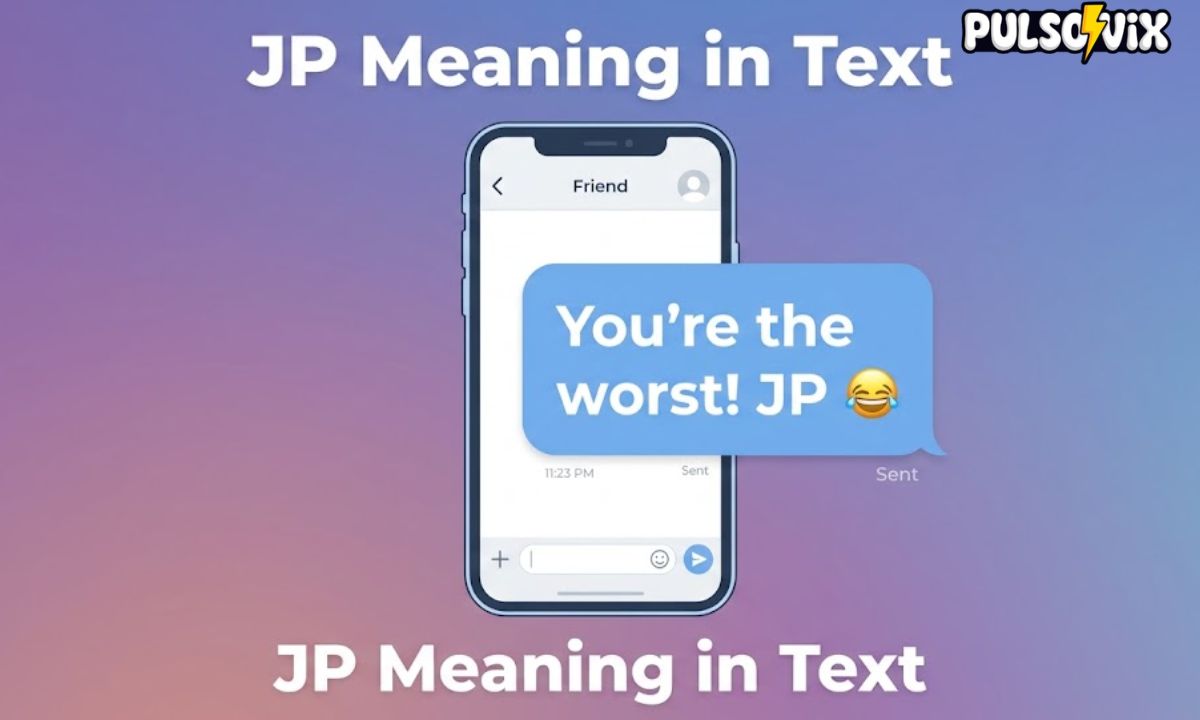

You’re mid-conversation, someone drops “JP,” and suddenly you’re frozen — did they just insult you, or were they joking? If you’ve ever been there, you’re not alone. The JP meaning in text trips up millions of people every day, from casual texters to seasoned Discord users. Two letters. Multiple meanings. Zero vocal tone to guide you.
This 2026-updated guide breaks down every angle of JP meaning in text — what it stands for, how it shifts depending on context, how to reply, and when you should never use it. Whether you’re a Gen Z native or someone trying to keep up with modern slang, this is the only resource you need.
What Does “JP Meaning in Text” Mean in Text?
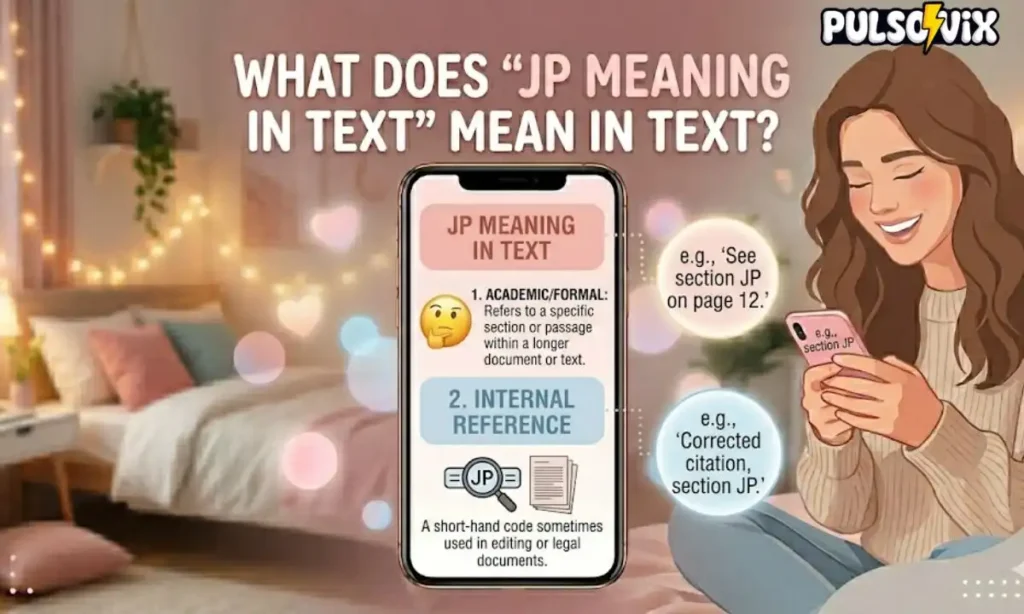
At its most basic level, JP meaning in text refers to the abbreviation “Just Playing.” It’s a quick, two-letter way of telling someone the previous message was a joke, a tease, or wasn’t meant seriously. Think of it as the digital equivalent of adding a playful wink at the end of a sentence.
When someone texts “You’re the worst cook I know. JP 😂,” they’re not actually criticizing you — they’re lightening the mood. Digital conversations strip away facial expressions, vocal tone, and body language. JP fills that gap. It’s a tone marker, a humor signal, and a misunderstanding preventer all rolled into two letters.
The phrase “just playing” existed long before texting culture. People said it in everyday conversation to soften sarcastic or teasing remarks. When SMS messaging exploded in the early 2000s and character limits made brevity essential, “just playing” got compressed into JP. Gaming communities, group chats, and social media platforms then spread it globally.
Today, understanding JP meaning in text is genuinely useful for navigating modern digital conversations with confidence.
The Most Common Meanings of “JP Meaning in Text”
While “Just Playing” is the dominant definition, JP meaning in text isn’t always one-size-fits-all. Context changes everything. Here are the four most widely recognized meanings:
1. JP = Just Playing
This is the primary and most common JP meaning in text, used across virtually every platform. It signals that a statement — often sarcastic, teasing, or bold — was not meant literally or seriously.
Examples:
- “You’re literally impossible to talk to. JP, you’re one of my favorite people 😄”
- “I can’t believe you did that 😤 JP relax I’m not mad”
- “Your taste in music is criminal. JP but seriously 😂”
It acts as a tone clarifier. Because text is emotionless on its own, JP saves friendships, avoids drama, and keeps conversations fun.
2. JP = Japanese Person
In gaming communities, anime forums, and culture-related discussions, JP meaning in text can shift to represent “Japanese Person” or simply refer to Japan. This is especially common when players are discussing server regions or game content.
Example:
- “The JP players on this server are seriously skilled.”
- “Is this game available on JP servers yet?”
Context makes this distinction obvious. If the conversation is about gaming or Japanese culture, this meaning applies.
3. JP = Initials
Sometimes JP meaning in text has nothing to do with slang at all — it’s simply someone’s initials. Names like John Paul, Jessica Parker, or James Peterson get shortened to JP in casual references.
Example:
- “Did JP confirm for the party tonight?”
- “Ask JP to send the file over.”
If someone refers to a specific person in the conversation, this meaning is almost certainly the intended one.
4. JP = Job Position (Work Chats)
In professional or HR-related conversations, JP meaning in text sometimes stands for “Job Position” or “Job Posting.” This is niche but worth knowing if you work in recruiting, HR, or organizational communication.
Example:
- “We need to fill the open JP before Q3 ends.”
- “There are three JPs available in the marketing department.”
This meaning almost never appears in casual texting — it’s specific to workplace and professional contexts.
How “JP Meaning in Text” Is Used in Real Conversations
Understanding JP meaning in text in theory is one thing. Seeing it in real-life scenarios is another. Here’s how it plays out across different platforms and relationships:
Friends & Casual Texting
Among close friends, JP meaning in text is pure playfulness. It’s how people tease without truly offending. Sarcasm flows freely between friends, and JP acts as the safety net.
“Bro you took 20 minutes to reply to a one-word text. JP but what were you doing 😂”
“You ate my leftovers??? 😤 JP I saved you some anyway 😅”
The tone is warm, energetic, and funny. JP in this context is the textual version of a shove on the shoulder — affectionate, not aggressive.
Instagram & Snapchat
On visual platforms, JP meaning in text pops up in captions, comments, and DMs. Creators use it to post edgy or sarcastic captions while making it clear they’re not being mean-spirited.
Caption: “Best photographer you’ll ever meet. JP, but I do try 😂📸”
Comment: “That outfit is dangerous 🔥 JP but seriously where’s it from?”
The short, punchy nature of JP fits perfectly with social media’s fast-scrolling culture.
Dating Apps
On platforms like Tinder, Bumble, or Hinge, JP meaning in text takes on a flirty, slightly daring energy. People use it to test interest, drop compliments, or say bold things — then pull back with JP to avoid seeming too intense.
“You’re honestly too attractive for this app… JP but not really 😏”
“I think we’d get along dangerously well. JP, I promise I’m normal 😂”
It creates a safe space for vulnerability wrapped in humor. The person gets to be genuine while having a joke to hide behind if needed.
Gaming & Online Communities
JP meaning in text absolutely thrives in gaming. Trash talk is part of gaming culture, and JP lets players roast each other without anyone actually getting offended.
“Bro your aim is terrible JP I’ve seen better from a blindfolded player 😂”
“You carried the whole team into defeat. JP we all had a bad round”
Discord servers and gaming chats use JP constantly. It keeps competitive banter fun rather than hostile.
Work or Professional Chat
This is where JP meaning in text gets tricky. Using it in a Slack message or Teams chat could confuse colleagues who aren’t familiar with the slang — or worse, make you seem unprofessional.
In most professional settings, skip JP entirely. If you want to signal humor in a work message, spell it out: “Just kidding!” or use a clear emoji. The only exception is a highly casual team culture where everyone’s already using informal language.
Is “JP Meaning in Text” Rude, Flirty, or Offensive?
The short answer: JP meaning in text is almost always positive — but context can flip that entirely.
When It Feels Positive
- After a playful tease between friends
- When flirting lightly on a dating app
- After a sarcastic compliment or exaggerated joke
- In gaming chats to keep trash talk lighthearted
- When you want to test the waters without full commitment
In these cases, JP is warm, funny, and socially smooth.
When It Feels Negative
- After a genuinely harsh or hurtful comment (“Your work is really bad. JP.”)
- When used dismissively in a serious argument
- If the original message crosses a personal boundary
- When overused to avoid accountability for actual rudeness
JP does not erase the impact of a genuinely offensive message. Adding it afterward can come across as cowardly or dismissive — as if the person wanted to say something cruel and is now hiding behind “just playing.”
Psychology of Tone
Psychologically, humans are wired to pick up on tone through sound and facial expressions. Remove those, and a sarcastic message becomes genuinely ambiguous. JP meaning in text exists to solve this exact problem — it’s a cognitive shortcut that says “decode this as humor, not hostility.”
But here’s the thing: tone markers only work when the underlying message is actually harmless. JP can’t transform a real insult into a joke. If the content is cruel, JP makes it worse, not better. Always ask yourself: “Would this be funny even without JP?” If yes, go ahead. If not, reconsider.
How to Respond When Someone Says “JP Meaning in Text”
Knowing JP meaning in text is one thing — knowing how to respond is another. Here are smart replies for every situation:
Casual Replies
- “😂 okay okay I’ll let it slide”
- “You’re so lucky I know you’re joking rn 💀”
- “JP yourself 😂”
- “Thought so 😌”
Funny Replies
- “JP or not, that hurt 😤😂”
- “Sure JP but your face tells a different story 👀”
- “JP confirmed, roast level: mild 🔥”
- “You typed JP real fast after that one 😂”
Neutral Replies
- “Haha okay, got it”
- “Alright, I knew you were joking”
- “No worries, I figured 😊”
Professional Replies
If someone uses JP in a work chat and you’re unsure of tone:
- “Ha — good one. Just to confirm, we’re still on for the [task] deadline?”
- “Got it 😄 — let me know if that was serious though!”
Always redirect to clarity in professional settings without making it awkward.
Common Misunderstandings About “JP Meaning in Text”
Even people who know JP meaning in text fall into common traps. Here’s what to watch out for:
Thinking It Means Japan Every Time
Japan’s country code is JP. So in some gaming or cultural spaces, someone might type JP and mean the country, not “just playing.” Always read the surrounding conversation before assuming.
Confusing It With “JK”
JK (Just Kidding) and JP (Just Playing) are similar but not identical. JK is more universally recognized and slightly more formal. JP feels more casual and is more commonly associated with playful teasing rather than outright jokes. They’re interchangeable most of the time, but JP carries a slightly softer, more playful tone.
| Term | Stands For | Tone | Common Platform |
| JP | Just Playing | Playful, teasing | Texting, gaming, social media |
| JK | Just Kidding | Joking, light sarcasm | Texting, social media |
| /s | Sarcasm | Ironic, dry | Reddit, forums |
| LOL | Laugh Out Loud | Amusement | Universal |
| lmao | Laughing My A** Off | Stronger amusement | Casual chats |
Assuming It Fixes Hurt Feelings
JP meaning in text is not a “get out of jail free” card. If you say something genuinely hurtful and tack on JP, the damage is already done. It doesn’t undo the words — it just tells the person you knew it could sting and said it anyway. Use JP to soften harmless teasing, not to cover up real cruelty.
Using It in Serious Talks
If someone is opening up about something emotional or serious, JP is absolutely the wrong tool. Imagine someone sharing a personal struggle and your response is, “Sounds like you made terrible choices. JP.” That’s tone-deaf at best and damaging at worst. Read the room. Serious conversations deserve clear, sincere language.
Also read this Blog: bk meaning in text: What It Really Means in 2026 (Clear & Simple Guide)
Similar Slang Terms You Should Know
If you’ve got JP meaning in text down, these related terms will round out your digital vocabulary:
| Slang | Full Form | When to Use |
| JK | Just Kidding | Light jokes, universal contexts |
| FR | For Real | Emphasizing sincerity |
| NGL | Not Gonna Lie | Honest or slightly surprising takes |
| ISTG | I Swear to God | Emphasis, sometimes frustration |
| IKR | I Know Right | Agreement, solidarity |
| LMAO | Laughing My A** Off | Humor, reaction to something funny |
| /j | Joking (tone indicator) | Explicit joke flag on Reddit/Twitter |
| /s | Sarcasm | Signal for ironic statements |
| TBH | To Be Honest | Sharing genuine opinion |
| SMH | Shaking My Head | Mild disappointment or disbelief |
Each of these serves a slightly different emotional function. The more you know, the easier it is to read the room in digital conversations.
When You Should Avoid Using “JP Meaning in Text”
Knowing JP meaning in text also means knowing when NOT to use it.
Professional Settings
Slack, Microsoft Teams, work emails, client messages — none of these are the right home for JP. Even in casual company cultures, JP can confuse, seem unprofessional, or simply not land. Write out “just kidding” or use a clear emoji instead. Professionalism protects relationships that matter.
Cross-Cultural Chats
Not everyone around the world is familiar with JP meaning in text as slang. In many regions, JP is exclusively associated with Japan. Using it casually with international contacts, non-native English speakers, or people from different digital backgrounds can cause real confusion. When in doubt, be explicit about your intent.
Sensitive Situations
If the conversation involves grief, mental health, conflict resolution, or anything emotionally charged, leave JP out entirely. Humor has its place — but not when someone needs to feel genuinely heard and respected. Using JP in these moments can come across as dismissive, even if you meant it lightly.
What Does JP Mean in Text From a Girl?
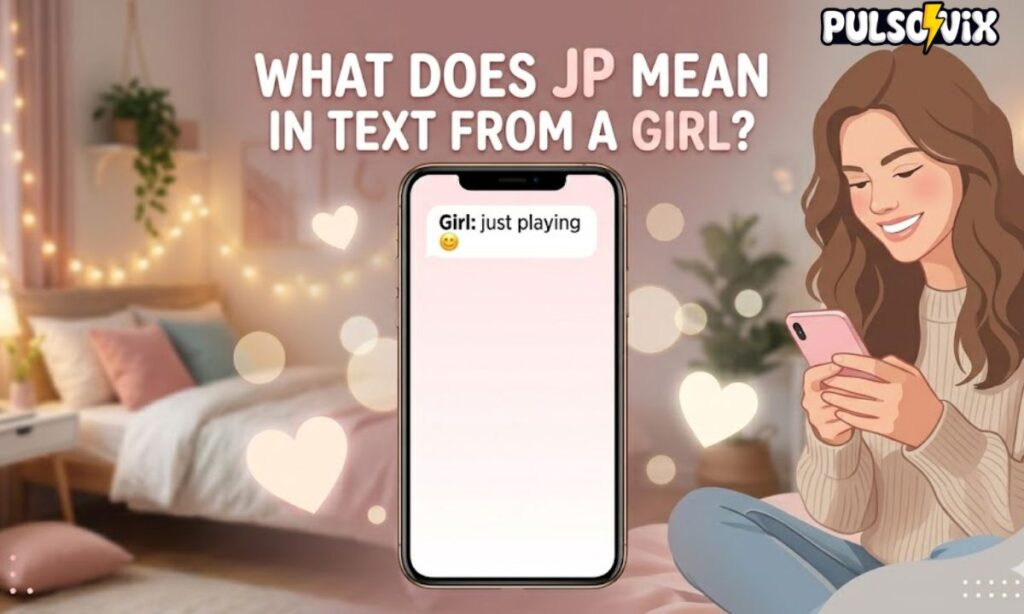
When a girl uses JP meaning in text, it almost always means “Just Playing” — but the subtext can be layered. Girls often use JP after a flirty, teasing, or bold statement to keep things light without fully committing to the sentiment.
For example, if she texts: “You’re literally my favorite person… JP 😂” — there’s a good chance some truth is tucked inside that joke. It’s a classic move: say how you really feel, then wrap it in humor so it doesn’t feel too vulnerable.
Here’s a quick breakdown of what JP meaning in text from a girl might signal:
- After a compliment: She probably means it at least a little, but doesn’t want to come on too strong.
- After a tease: She’s being playful — it’s friendly flirtation or genuine humor.
- After a bold/direct statement: She’s testing how you respond before committing to the sentiment.
- After something ambiguous: She’s genuinely joking and doesn’t want you to overthink it.
The best response? Match her energy. Keep it light, playful, and don’t over-analyze. If you’re curious whether she meant it, a casual “JP or nah? 😏” is a perfect way to dig a little deeper without making it weird.
Conclusion
JP meaning in text is deceptively simple: two letters that carry tone, humor, and social intelligence all at once. At its core, it stands for “Just Playing” — a digital shorthand for “relax, I’m teasing.” But as this guide has shown, JP meaning in text also shifts based on platform, relationship, gender, and cultural context.
The real power of understanding JP meaning in text isn’t just decoding a message — it’s becoming a better digital communicator. You’ll read conversations more accurately, respond more confidently, and avoid the awkward misunderstandings that two careless letters can create.
Use JP meaning in text with friends, in gaming chats, on social media, and in flirty conversations. Avoid it in serious discussions, professional emails, and cross-cultural exchanges where clarity matters more than brevity.
Language moves fast. Slang evolves. But the human need to say “hey, I’m just playing” — to tease with warmth rather than wound with words — that doesn’t change. JP meaning in text is simply 2026’s way of doing exactly that.
