
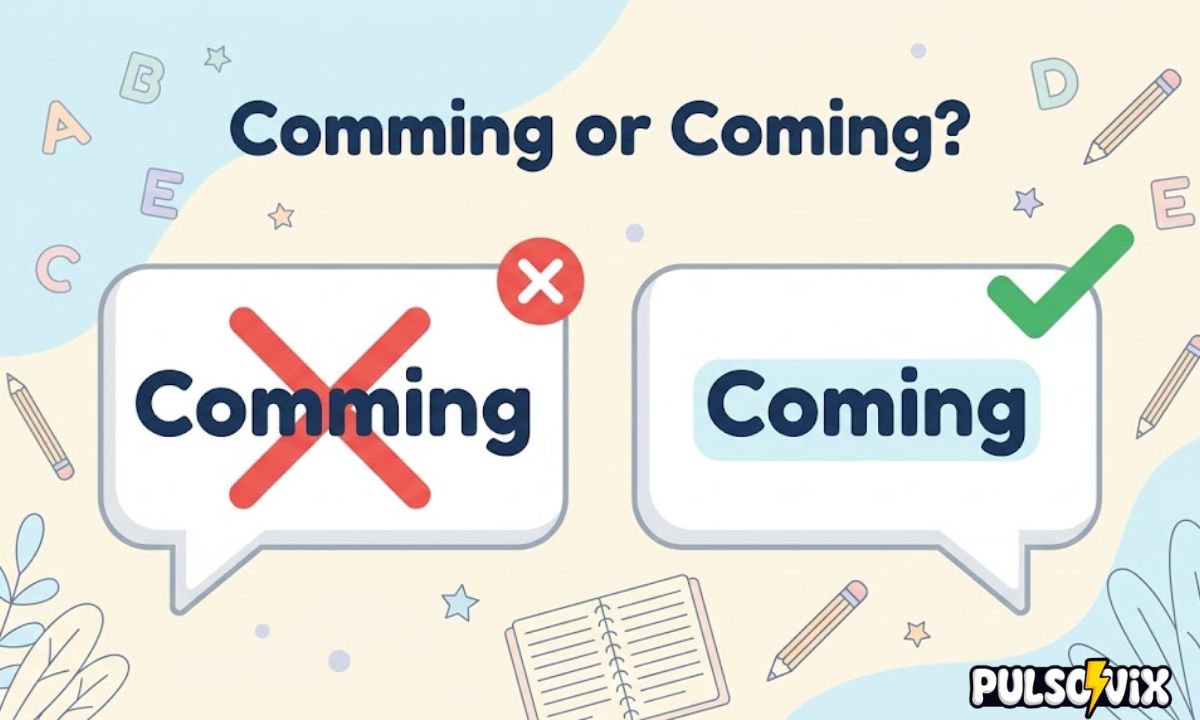

If you’ve ever paused mid-sentence wondering whether to type “comming” or “coming,” you’re not alone. This is one of the most frequently searched spelling questions in English, and the confusion makes total sense once you understand why it happens. Mastering English Spelling: Comming or Coming? is something almost every English learner — and even native speakers — grapples with at some point.
The short answer is simple: “coming” is correct, and “comming” is always wrong. But the why behind this rule is where things get interesting, and that’s exactly what this guide on Mastering English Spelling: Comming or Coming? will help you understand.
By the end of this article, you’ll know the grammar rule behind this word, why so many people get it wrong, and how to make sure you never make this mistake again.
Understanding the Difference: “Comming” vs. “Coming”
When discussing Mastering English Spelling: Comming or Coming?, the first thing to clarify is that only one of these spellings actually exists in the English language.
- Coming — a real word, the present participle of “come,” used constantly in everyday speech and writing.
- Comming — not a real word. It’s a misspelling that doesn’t appear in any English dictionary.
Despite “comming” being incorrect, it shows up surprisingly often in emails, social media posts, and casual texts. This happens because English spelling rules aren’t always intuitive, especially when it comes to adding suffixes like “-ing” to verbs.
Understanding Mastering English Spelling: Comming or Coming? starts with recognizing that English has two competing patterns for forming the present participle: doubling the final consonant, or dropping a silent “e.” The word “come” follows the second pattern, not the first — and that’s the root of the entire confusion.
Why “Comming” Is Incorrect
“Comming” is incorrect because it applies the wrong spelling rule to the verb “come.” Many people assume that adding “-ing” to a short verb automatically means doubling the last consonant, the way it works for words like “running” or “swimming.”
But “come” doesn’t follow that rule. It ends in a silent “e,” and verbs ending in silent “e” follow a completely different pattern when “-ing” is added.
Here’s the key fact at the center of Mastering English Spelling: Comming or Coming?:
- “Come” + “-ing” = “coming” (drop the silent “e,” add “-ing”)
- “Come” + “-ing” ≠ “comming” (this would require doubling the “m,” which the rule doesn’t call for)
No major English dictionary — American, British, Canadian, or Australian — lists “comming” as a valid spelling. It’s a mistake, full stop.
Consonant Doubling Rule
To fully grasp Mastering English Spelling: Comming or Coming?, it helps to understand the consonant doubling rule, since this is the rule people mistakenly apply to “come.”
The consonant doubling rule states that for short verbs with one syllable, ending in one vowel followed by one consonant, you double the final consonant before adding “-ing” or “-ed.”
This rule applies to words where the vowel sound is short and stressed. Since “come” doesn’t fit this pattern (it ends in a silent “e,” not a single consonant after a single vowel), the doubling rule simply doesn’t apply.
Also read this blog: WYGG Meaning in Text: Your Fun Guide to This Trendy Acronym
Examples of Correct Doubling:
| Base Word | Rule Applied | Correct Form |
| Run | One vowel + one consonant, short vowel sound | Running |
| Swim | One vowel + one consonant, short vowel sound | Swimming |
| Stop | One vowel + one consonant, short vowel sound | Stopping |
| Sit | One vowel + one consonant, short vowel sound | Sitting |
Examples Without Doubling:
| Base Word | Why No Doubling | Correct Form |
| Come | Ends in silent “e” | Coming |
| Hope | Ends in silent “e” | Hoping |
| Make | Ends in silent “e” | Making |
| Care | Ends in silent “e” | Caring |
As the table shows, “come” belongs firmly in the second group. This comparison is one of the clearest ways to visualize Mastering English Spelling: Comming or Coming? and understand why “coming” is the only acceptable spelling.
The Silent “E” Rule
The silent “e” rule is the actual rule governing the word “coming,” and it’s central to Mastering English Spelling: Comming or Coming?
This rule states that when a verb ends in a silent “e,” you drop the “e” before adding a suffix that begins with a vowel, such as “-ing,” “-ed,” or “-able.”
So the transformation looks like this:
- Start with the base verb: come
- Identify the silent “e” at the end
- Drop the “e”: com
- Add “-ing”: coming
No doubling. No extra letters. Just a clean swap of “e” for “-ing.”
Examples of the Silent “E” Rule:
- Write → Writing (not “writting”)
- Drive → Driving (not “drivving”)
- Ride → Riding (not “ridding,” which is actually a different word!)
- Believe → Believing (not “believeing”)
- Come → Coming (not “comming”)
Notice the pattern here. Every one of these words drops the silent “e” before “-ing” is attached. This is the exact mechanism behind Mastering English Spelling: Comming or Coming?, and once you see the pattern repeated across multiple words, it becomes much easier to remember.
Scenario Example: The Incorrect Use of “Comming”
Let’s look at a real-world scenario to bring Mastering English Spelling: Comming or Coming? to life.
Imagine a student texting a friend:
“Hey, are you comming to the study group tonight? I’m comming around 6 PM.”
At first glance, this message seems fine — the meaning is clear, and most readers would understand it instantly. But the spelling “comming” appears twice, and both instances are incorrect.
This kind of mistake is extremely common in informal writing. Autocorrect doesn’t always catch it, especially on mobile keyboards, and many people simply haven’t been taught the silent “e” rule explicitly. The result is a message that looks careless, even if the intent and grammar are otherwise fine.
The Correct Use: “Coming”
Now here’s the corrected version of that same message, properly addressing Mastering English Spelling: Comming or Coming?:
“Hey, are you coming to the study group tonight? I’m coming around 6 PM.”
Notice how the meaning hasn’t changed at all — only the spelling has been fixed. This small correction makes a big difference in how the message is perceived. It signals attention to detail, even in a casual context.
“Coming” can function in several grammatical roles:
- Present participle: “She is coming to the meeting.”
- Gerund (noun form): “His coming was unexpected.”
- Adjective: “The coming weeks will be busy.”
In every one of these uses, the spelling stays the same: “coming,” with one “m.” This consistency is part of what makes Mastering English Spelling: Comming or Coming? such a useful topic to master once and for all — the rule never changes based on context.
Why Do We Make This Mistake?
There are several reasons people struggle with Mastering English Spelling: Comming or Coming?, and understanding them can help you avoid the error in the future.
- Pattern overgeneralization — English learners often apply the consonant doubling rule too broadly, assuming all short verbs follow it.
- Autocorrect inconsistency — Some keyboards and apps don’t flag “comming” as an error, especially in casual messaging apps.
- Visual similarity to doubled words — Words like “running,” “swimming,” and “stopping” are so common that “comming” can look “right” by association.
- Lack of explicit rule teaching — Many people learn spelling by memorization rather than by understanding the underlying silent “e” rule.
- Fast typing and texting habits — When typing quickly, double letters can slip in without a second thought.
Recognizing these triggers is a major step toward Mastering English Spelling: Comming or Coming? for good. Once you know why the mistake happens, it becomes much easier to catch yourself before making it.
Common Spelling Errors and How to Avoid Them
“Comming” isn’t the only word that trips people up. Many English words follow similarly confusing rules, and learning them together can reinforce your understanding of Mastering English Spelling: Comming or Coming?
| Incorrect Spelling | Correct Spelling | Rule Involved |
| Comming | Coming | Silent “e” rule |
| Recieve | Receive | “i before e” exception |
| Definately | Definitely | Root word “definite” |
| Untill | Until | Single “l” ending |
| Occured | Occurred | Doubling rule (this one does double!) |
| Seperate | Separate | Vowel pattern memorization |
A few tips to avoid these kinds of errors:
- Break words down into their root form before adding suffixes.
- Read your writing aloud — mistakes are often easier to hear than see.
- Keep a personal list of words you frequently misspell.
- Use spell-check tools, but don’t rely on them blindly.
- Practice writing the correct form repeatedly until it becomes automatic.
How Writing Tools Can Help
Modern writing tools have made Mastering English Spelling: Comming or Coming? much easier for everyday writers. While understanding the rule is valuable, having a safety net catches mistakes you might otherwise miss.
Grammarly
Grammarly is one of the most widely used writing assistants, and it’s particularly effective at catching spelling errors like “comming.” Beyond just flagging the mistake, Grammarly explains why the correction is needed, which reinforces the learning process. Over time, users start internalizing the rules themselves, reducing reliance on the tool.
ProWritingAid
ProWritingAid offers similar real-time error detection, highlighting incorrect spellings like “comming” and suggesting “coming” instantly. It also provides deeper style and grammar analysis, making it a solid choice for writers who want more than basic spell-checking. Like Grammarly, it explains corrections, helping users understand the patterns behind common mistakes.
Both tools are valuable allies in Mastering English Spelling: Comming or Coming?, but they work best when paired with genuine understanding of the underlying rule — not as a replacement for it.
Examples of “Coming” in Different Contexts
To fully appreciate Mastering English Spelling: Comming or Coming?, it helps to see “coming” used correctly across a variety of real-world contexts.
In a Business Email
“I wanted to confirm that I’ll be coming to the quarterly review meeting on Thursday. Please let me know if there are any materials I should review beforehand.”
In professional communication, spelling errors like “comming” can undermine credibility, even when the rest of the message is well-written.
A Motivational Speech
“Big changes are coming for this team. The coming year will test us, but it will also define us. Are you ready for what’s coming?”
Here, “coming” is used three times in different grammatical roles — as a present participle, an adjective, and again as a participle — showing its versatility.
In Casual Conversation
“Hey, what time are you coming over? I’m just letting the food finish coming together in the oven.”
Even in relaxed, informal writing, the correct spelling matters for clarity and consistency.
In Literature
Authors frequently use “coming” to build anticipation or signal change: “Something was coming — she could feel it in the stillness of the air before the storm.”
Across all these examples, the spelling never changes. This consistency is one of the most reassuring aspects of Mastering English Spelling: Comming or Coming? — once you learn it, the rule applies everywhere.
Why Spelling Errors Matter in Professional Settings
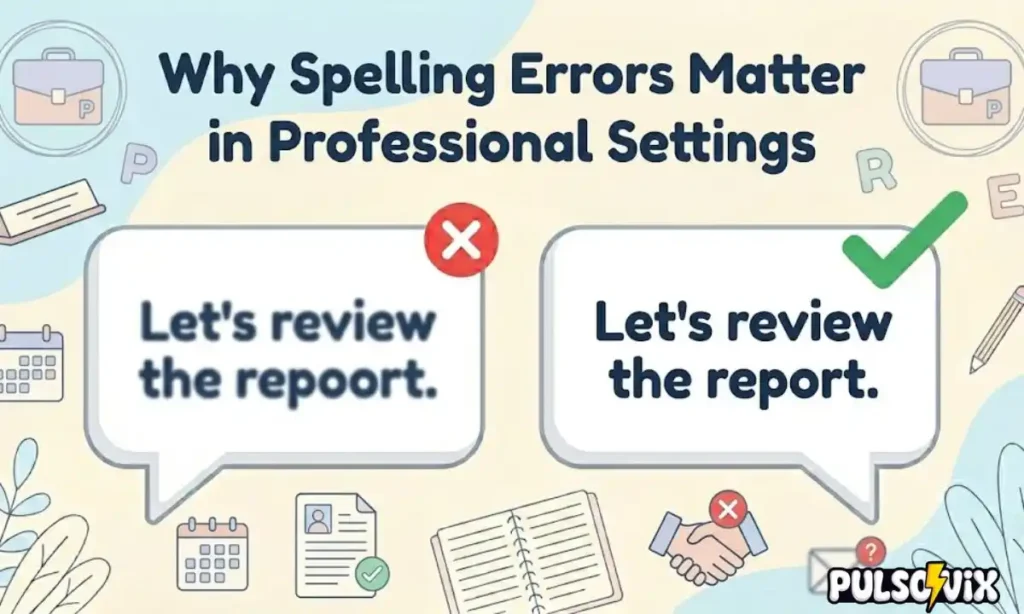
In professional environments, Mastering English Spelling: Comming or Coming? isn’t just an academic exercise — it has real consequences.
- First impressions: A resume, cover letter, or email with spelling errors can create an immediate negative impression, even before your qualifications are considered.
- Credibility: Clients and colleagues may question your attention to detail if basic words are misspelled.
- Clarity: While “comming” is usually understandable in context, repeated errors can make writing harder to follow.
- Brand perception: For businesses, website copy, marketing materials, and customer communications with spelling errors can damage trust and professionalism.
Spelling might seem like a small detail, but in competitive professional settings, small details often make a big difference.
The Role of Proper Spelling in Effective Writing
Effective writing is about more than just getting your point across — it’s about doing so clearly, credibly, and efficiently. Mastering English Spelling: Comming or Coming? plays a part in this larger picture.
When spelling is correct:
- Readers focus on your message, not your mistakes.
- Your writing feels more polished and trustworthy.
- Communication flows more smoothly, without distracting errors.
- You demonstrate command of the language, which builds authority.
When spelling is incorrect — even in small ways like “comming” instead of “coming” — it can create friction. Readers might pause, reread, or even question the accuracy of the content itself. Strong writing removes these obstacles, and Mastering English Spelling: Comming or Coming? is a small but meaningful step toward that goal.
Avoiding the “Comming” Trap: Tips for Writers
Here are practical, actionable tips for permanently solving Mastering English Spelling: Comming or Coming? in your own writing:
- Memorize the rule, not just the word — Remember: silent “e” verbs drop the “e” before “-ing.”
- Create a mental list of similar words — “Hope/hoping,” “make/making,” “come/coming” all follow the same pattern.
- Use mnemonic devices — Try: “One ‘m’ is enough when ‘come’ becomes ‘coming.'”
- Proofread before sending — A quick second look catches most spelling slips.
- Use writing tools as a backup, not a crutch — Let Grammarly or ProWritingAid catch mistakes, but try to understand why they’re flagged.
- Practice writing the word in sentences — Repetition builds muscle memory for correct spelling.
- Read more — Exposure to correctly spelled words in books, articles, and quality websites reinforces correct patterns naturally.
It’s worth revisiting this point because of how often spelling issues surface in workplace communication. Mastering English Spelling: Comming or Coming? becomes especially relevant in:
Why Spelling Errors Matter in Professional Settings
- Job applications and resumes
- Client-facing emails and proposals
- Marketing copy and website content
- Internal reports and presentations
- Social media posts representing a brand
In each of these cases, a simple error like “comming” can distract from your message and, in some cases, cost opportunities. Hiring managers and clients often use spelling as a quick (if imperfect) signal of overall quality and care.
The Importance of Learning Proper Spelling
Beyond professional contexts, Mastering English Spelling: Comming or Coming? matters for personal growth and communication confidence.
Good spelling:
- Reduces misunderstandings in written communication
- Helps non-native speakers integrate more confidently into English-speaking environments
- Builds a stronger foundation for advanced writing and grammar skills
- Makes reading and writing feel less stressful overall
Learning the rule behind “coming” versus “comming” isn’t just about one word — it’s about understanding a pattern that applies to dozens of other words ending in silent “e.”
Understanding Why Spelling Builds Confidence in Writing
There’s a psychological component to Mastering English Spelling: Comming or Coming? that’s often overlooked. When writers are unsure about spelling, they tend to:
- Hesitate before typing certain words
- Avoid using words they’re unsure about, limiting vocabulary
- Feel anxious about sending emails, messages, or documents
- Second-guess otherwise solid writing
Once you master a rule like the silent “e” pattern, that hesitation disappears — at least for that word. Multiply this across dozens of commonly confused words, and you get a writer who feels significantly more confident overall. Mastering English Spelling: Comming or Coming? is one small but meaningful piece of that larger confidence-building puzzle.
How Spelling Shapes First Impressions
Whether it’s a text message, an email, a job application, or a social media bio, spelling is often the very first thing people notice — sometimes before they even register the content of your message.
A correctly spelled “coming” signals:
- Attention to detail
- Familiarity with English writing conventions
- General care in communication
An incorrectly spelled “comming” — even if minor — can signal the opposite, regardless of the writer’s actual skill or intelligence. This is why Mastering English Spelling: Comming or Coming? matters far beyond the classroom; it shapes how people perceive you in seconds.
The Connection Between Spelling and Clear Thinking
Spelling and clarity of thought are more connected than many people realize. When you’re confident about spelling, you can focus your mental energy on structure, argument, and tone — rather than getting stuck second-guessing individual words.
Mastering English Spelling: Comming or Coming? frees up cognitive space. Instead of pausing to wonder “is it one ‘m’ or two?”, you can write fluidly, focus on your message, and communicate your ideas more effectively. Small spelling rules, once internalized, become invisible — and that’s exactly the goal.
Improving Spelling Through Daily Practice
Like any skill, spelling improves with consistent practice. Here’s how to build Mastering English Spelling: Comming or Coming? — and broader spelling skills — into your daily routine:
- Read for 15–20 minutes a day — Exposure to correctly spelled words reinforces patterns naturally.
- Keep a “tricky words” journal — Write down words you frequently misspell, along with the correct spelling and the rule involved.
- Use flashcards or spelling apps — Short, repeated practice sessions are highly effective.
- Write daily, even briefly — Journaling, emails, or social posts all count as practice.
- Review your own writing critically — Go back over old messages or documents and check for recurring errors.
Small, consistent habits compound over time. Within a few weeks of focused practice, words like “coming” stop requiring any thought at all.
Conclusion
Mastering English Spelling: Comming or Coming? ultimately comes down to one simple, memorable rule: “come” ends in a silent “e,” so that “e” gets dropped before adding “-ing,” resulting in “coming” — never “comming.”
This single rule applies consistently across business emails, casual texts, literature, and speeches alike. While the mistake is common — and understandable, given how confusing English suffix rules can be — it’s also easy to fix once you understand the silent “e” pattern.
By practicing regularly, using tools like Grammarly and ProWritingAid as helpful backups, and paying attention to similar silent “e” words like “hoping,” “making,” and “writing,” you’ll never have to wonder about Mastering English Spelling: Comming or Coming? again. The correct answer is always “coming” — confident, correct, and ready for any context.
