

If you’ve spent any time scrolling Instagram, Snapchat, or TikTok in the last few years, you’ve probably seen the letters “SFS” pop up in a caption, comment, or DM. Maybe a friend sent you “wanna do an sfs?” and you just nodded along, pretending you knew exactly what they meant. You’re not alone — this is one of the most-searched pieces of internet slang right now, and for good reason. It’s short, it’s everywhere, and it’s not always obvious at first glance.
This guide breaks down exactly what does SFS mean in text, where it came from, how it’s used across different apps, and when you should (and shouldn’t) use it yourself. By the end, you’ll never have to guess again.
What Does SFS Mean in Text?
In texting, SFS stands for “Shoutout for Shoutout.” It’s a simple agreement between two people on social media: I’ll promote your page, post, or profile if you promote mine in return. Think of it as a digital handshake — both sides agree to give the other person some visibility in exchange for the same favor.
So when someone texts you “let’s do sfs,” they’re basically asking you to feature them on your story, tag them in a post, or mention their account, with the expectation that you’ll get the same treatment back. It’s mutual, it’s quick, and it’s one of the easiest ways for two accounts to grow together without spending a dime on ads.
That said, the SFS meaning in text isn’t always one-size-fits-all. While “Shoutout for Shoutout” is by far the most common interpretation, context matters. Depending on the platform, the conversation, and even the region, SFS can shift slightly in meaning. We’ll cover those variations later in this article, but for 95% of everyday texting and social media use, SFS = mutual shoutout.
Here’s a quick breakdown of the core meaning:
| Term | Full Form | What It Means |
| SFS | Shoutout for Shoutout | Two users promote each other’s accounts or posts |
| SFS (rare) | Spam for Spam | Mutual liking/commenting spree to boost engagement |
| SFS (rare) | Sorry for Spamming | An apology after sending several messages in a row |
The takeaway here is simple: whenever you see SFS in a text or caption, your first guess should be “Shoutout for Shoutout.” It’s right almost every time.
What is SFS in Instagram
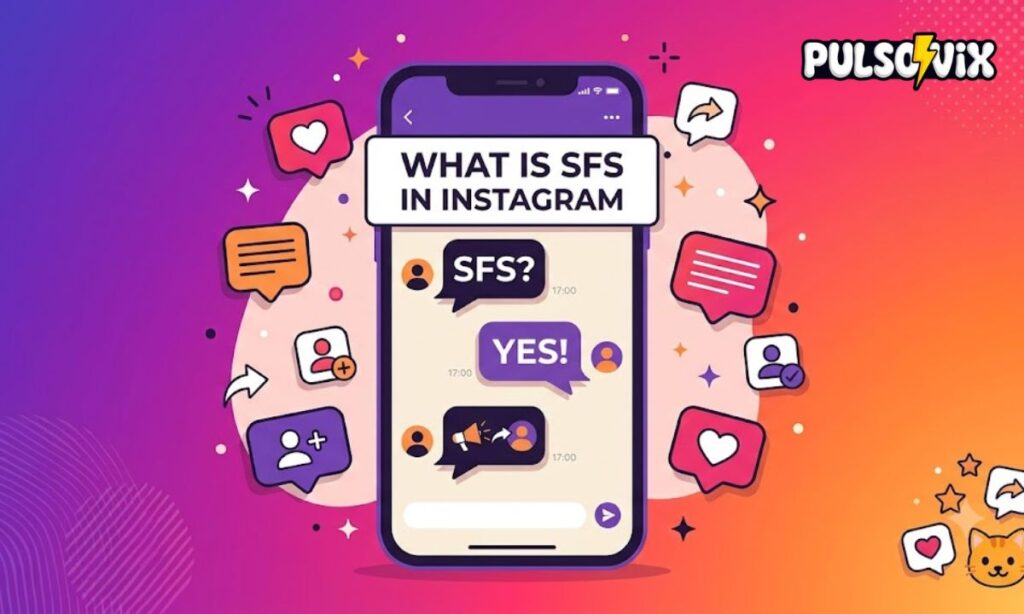
Instagram is really where the SFS meaning in text took off, and it’s still the platform where you’ll see it used the most. On Instagram, SFS means Shoutout for Shoutout, and it works almost exactly the same way it does in texting — just with a few platform-specific habits attached.
Here’s how it typically plays out on Instagram:
- The request – Someone posts a story or comment saying “SFS?” or “Anyone want to SFS?”
- The agreement – Another user responds, agreeing to the exchange.
- The shoutout – Both users post each other on their Stories, tag each other in a feed post, or mention each other’s handle in a caption.
- The payoff – Followers from each account see the shoutout and (hopefully) check out the other profile, follow, or engage.
Instagram users lean on SFS because it’s a free, organic way to reach new followers without running paid promotions. Small creators, meme pages, and even local businesses use it constantly to cross-promote audiences that might overlap.
It’s worth noting that on Instagram specifically, SFS sometimes gets paired with the hashtag #SFS in captions, which acts almost like a flag saying “I’m open to trading shoutouts.” If you ever see #SFS under a post, that’s usually the account signaling they’re actively looking for a swap.
Quick Instagram Slang Comparison
| Abbreviation | Meaning | How It’s Used |
| SFS | Shoutout for Shoutout | Mutual account promotion |
| F4F | Follow for Follow | Mutual following to grow follower count |
| L4L | Like for Like | Mutual liking of posts |
| DM | Direct Message | Private one-on-one message |
| BFF | Best Friend Forever | Casual term for a close friend |
Understanding this table helps put the SFS meaning in text into context next to other common Instagram abbreviations — they’re all part of the same engagement-driven culture.
Where Is SFS Commonly Used?
SFS isn’t limited to just one app. While Instagram is its home base, the term has spread across nearly every major social platform and even into everyday texting. Here’s where you’ll most likely run into it:
- Instagram – The most common home for SFS, used in Stories, captions, and DMs.
- Snapchat – Users post “SFS” on their Snap Story to ask friends or followers for a mutual shoutout.
- TikTok – Creators use SFS in comments or captions to collaborate and cross-promote content.
- Discord – Smaller communities and gaming servers use SFS to promote each other’s channels or profiles.
- WhatsApp and SMS – Less common, but still appears in group chats, especially among people running social pages or small businesses.
- Twitter/X – Sometimes used, though “RT for RT” (retweet for retweet) is more typical here.
The reason SFS spread so widely is simple: every platform that rewards followers, likes, or visibility eventually develops its own version of mutual promotion slang. SFS just happened to become the most universally recognized term for it, especially among Gen Z and younger millennial users.
It’s also become common in gaming communities and Discord servers, where players use SFS to boost each other’s streaming channels, YouTube uploads, or gaming clips. The core idea stays the same no matter the platform — you help me get seen, I’ll help you get seen.
Sfs mean in Text jamaica
Slang doesn’t always travel the same way in every region, and SFS is a good example of that. In Jamaica, and among Jamaican social media users more broadly, SFS is still primarily understood and used the same way it is everywhere else: Shoutout for Shoutout. You’ll see it used the same way in Jamaican TikTok comments, Instagram captions, and group chats as anywhere else in the world.
That said, regional slang can sometimes blend with local dialect or Patois phrasing, which occasionally causes confusion online. Some users have joked or speculated about alternate meanings circulating in Jamaican social circles, but there’s no widely confirmed, distinct Jamaican-specific definition that differs from the standard SFS meaning in text. If anything, the confusion usually comes from SFS being used alongside other slang terms in the same sentence, not because the meaning itself changes.
A few quick points worth knowing:
- The core meaning of SFS (Shoutout for Shoutout) stays consistent across most English-speaking online communities, including Jamaica.
- Context and tone still matter — if it’s used in a flirty or joking exchange, it might carry a slightly different vibe than a straightforward promotional request.
- When in doubt, the safest interpretation is still the most popular one: mutual shoutout or promotion.
If you ever see SFS used in a Jamaican chat or comment thread and the standard meaning doesn’t quite fit, it’s worth asking the person directly or reading a few messages before and after for clarity.
Also, read this Blog: What Does SMYW Mean in Text 💬 Full Guide Here (2026)
Examples of SFS in Conversation
Sometimes the easiest way to understand slang is to see it in action. Here are some realistic examples of how SFS shows up in everyday conversations:
Example 1 – Instagram DM
Person A: “Hey! Want to do an SFS? I’ll post you on my story if you post me on yours.” Person B: “Yeah, for sure! Sending you mine now.”
Example 2 – Snapchat Story Caption
“SFS anyone? 🔥 Drop yours below and I’ll post you back!”
Example 3 – TikTok Comment
“Love this edit! SFS? I do content too 👀”
Example 4 – Group Chat
Friend 1: “We should sfs each other’s new pages.” Friend 2: “Bet, send me the link and I’ll post it tonight.”
Example 5 – Casual Texting
“omg did u see her page? we should sfs lol”
Notice how casual and short these messages are. That’s part of the appeal — SFS lets people make a clear request without typing out the full phrase every time. In each example, the underlying meaning stays the same: one person is offering to promote the other’s account in exchange for getting promoted back.
When to Use and When Not to Use SFS
Like most internet slang, SFS works great in the right setting but can feel out of place — or even unprofessional — in the wrong one. Here’s a clear breakdown to help you decide.
✅ When to Use SFS
- Casual social media interactions – Stories, comments, and DMs with friends or followers.
- Growing a small or new account – SFS is a great low-cost way to gain initial visibility.
- Networking with similar creators – If you and another creator have overlapping audiences, SFS can introduce you to new followers.
- Friendly, informal texting – Chatting with friends about promoting each other’s pages.
- Niche communities – Gaming groups, fan pages, or hobby accounts where mutual support is part of the culture.
❌ When Not to Use SFS
- Professional or business communication – Emails, client messages, or formal pitches should avoid slang entirely.
- With accounts that have very different audiences – An SFS only works well if both followings actually overlap in interest.
- Overusing it constantly – Spamming SFS requests everywhere can come across as desperate or low-effort.
- Without a clear agreement – Always confirm what each person is posting and when, to avoid one side feeling shortchanged.
- On serious or sensitive topics – Slang like SFS doesn’t belong in conversations about important personal or work-related matters.
The general rule: if the conversation is light, social, and growth-focused, SFS fits right in. If it’s formal, serious, or business-critical, leave the abbreviation out and communicate clearly instead.
SFS meaning in business
While SFS started as social media slang, it has found its way into small business marketing too — especially among local shops, online stores, and micro-influencers who rely on word-of-mouth promotion. In a business context, the SFS meaning in text still centers on mutual promotion, but the goals shift slightly toward driving sales and visibility rather than just follower counts.
Here’s how small businesses typically use SFS:
| Business Use Case | How SFS Helps |
| Local shop cross-promotion | Two nearby businesses shout each other out to share customer bases |
| Influencer partnerships | A brand and a creator post about each other to reach new audiences |
| Product collaborations | Two small brands promote a joint product or bundle |
| Community building | Businesses in the same niche support each other instead of competing directly |
For business owners, SFS can be a smart, no-cost alternative to paid advertising, especially in the early growth stages. The key difference from casual SFS use is intent — businesses tend to track results (follower growth, website clicks, or sales) rather than just doing it for fun. A well-planned SFS between two complementary businesses, like a coffee shop and a local bakery, can introduce both audiences to a new brand they’re likely to genuinely enjoy.
Just like in personal use, business SFS only works well when both parties have a similar or overlapping audience. A mismatch in followers or customer base usually leads to a shoutout that doesn’t convert into real engagement.
Conclusion
So, what does SFS mean in text? In almost every situation, it comes down to one simple idea: “Shoutout for Shoutout.” Whether you’re scrolling Instagram, chatting on Snapchat, or texting a friend about growing your page, SFS represents a quick, mutual way for two people to support each other online.
Understanding the SFS meaning in text isn’t just about decoding slang — it’s about understanding the culture behind it. Social media thrives on community-driven growth, and SFS is one of the simplest examples of that in action. It costs nothing, takes seconds to arrange, and can genuinely help smaller accounts and businesses get noticed by the right audience.
Now that you know exactly what SFS means in text, you’ll never have to wonder again the next time it shows up in your DMs, comments, or group chats. Use it wisely, keep it casual, and remember — it works best when both sides actually follow through.
